
Your Home Inspection Doesn't Cover the Sewer Line. Here's Why That Matters in Port Alberni.

You're buying a house in the Alberni Valley.
The inspection came back fine - roof has life left, electrical is updated, no moisture in the crawlspace.
You waive subjects and move in, eight months later the basement drain backs up.
A plumber runs a camera and finds the clay lateral has roots through three joints and a section that's collapsed under the front lawn. Quote to replace: five figures, and it's all yours now.
This happens more than it should here, and the reason is simple: a standard home inspection stops at the foundation wall.
The buried sewer lateral - the pipe running from your house out to the city main - isn't part of it.
Inspectors can't see it, don't test it, and their reports say so in the fine print almost nobody reads.
What a home sewer inspection actually covers
A good home inspector will tell you this themselves. They inspect what's visible and accessible. For plumbing, that means fixtures, visible supply lines, the water heater, and whether drains run when they open the taps.
What they can't tell you is what happens to that water once it leaves the house. Running a tap for thirty seconds proves the line isn't fully blocked today. It proves nothing about a pipe that's cracked, root-bound, or sagging under twenty feet of yard.
That's a separate inspection, and it's the one people skip.
Why Alberni Valley homes are higher risk than most
Port Alberni's housing stock is the issue. A large share of homes here went up between the 1940s and the 1970s, when the mill was running and the town was building fast. Sewer laterals from that era are clay or cast iron, and both fail in predictable ways.
Clay pipe comes in short sections with a joint every few feet. Those joints are the weak point. Tree roots find the moisture inside and work in through the seam, then keep growing until the pipe is packed. Clay also cracks under ground movement and shifts out of alignment at the joints.
Cast iron corrodes from the inside out. Over decades it loses diameter and the interior goes rough enough to catch everything passing through. What was a four-inch line is now effectively a two-inch line with a surface like sandpaper.
Orangeburg is the one nobody wants to find. It's a tar-impregnated wood-fibre pipe used in some postwar construction, and its working life is roughly fifty years. Every Orangeburg line in this town is past that. It doesn't crack - it deforms, going oval and then collapsing.
Add mature trees on established lots - and Port Alberni has plenty, which is part of what makes the older neighbourhoods worth buying into - and you have the two conditions that put the most pressure on a buried line.
What a sewer scope actually shows you
We feed a camera on a flexible push cable into the line, usually through a cleanout, and run it out toward the city connection. You watch the screen with us.
What comes back is specific:
Root intrusion - where roots have entered and how much of the pipe they're occupying
Bellies - sections that have settled and now hold standing water, which is why the line catches debris
Cracks, breaks, and offsets - where a section has failed or shifted out of line
Pipe material and condition - clay, cast iron, ABS, or Orangeburg, and how much life is realistically left
Blockages - and whether they're a one-time clog or a symptom of the pipe itself
Location and depth - we can locate a problem from the surface, so if repair is needed you know exactly where and how deep before anyone quotes excavation
That last one changes the economics.
The difference between "somewhere under the yard" and "eleven feet out from the foundation, four feet down, under the lawn not the driveway" is thousands of dollars in a repair quote.
When to book it
During your subject period. That's the whole point. A sewer scope is leverage - either you're satisfied and you proceed, or you have a documented condition report to take back to the seller for a price adjustment or a repair before closing.
Book it at the same time as your home inspection. Most inspections happen early in the subject window specifically so there's room to negotiate on what turns up, and a sewer scope fits the same timeline.
If you've already closed and you're reading this with a sinking feeling, it's still worth doing. Knowing you have roots at a joint means you can plan a root removal on your schedule instead of dealing with a backup on a long weekend in February.
What it costs versus what it saves
A scope costs a fraction of what a lateral replacement does. That's the entire argument and it doesn't need dressing up.
Replacing a sewer lateral means excavation, permits, restoration of whatever was on top of it, and the pipe itself. Depending on length, depth, and whether it runs under a driveway or a mature tree, it's one of the larger single repairs a house can hand you.
The scope tells you whether you're buying that problem. If the line is sound, you've bought certainty on the one system nobody else checked. If it isn't, you found out while you still had negotiating room.
Which homes are worth scoping
Not every purchase needs one.
If you're buying a 2015 build on ABS pipe with no significant trees on the lot, the risk is genuinely low.
Scope it if the home:
Was built before roughly 1980
Has mature trees anywhere near the front yard or the line's likely run
Has any history of drain problems the seller has disclosed
Has had drain cleaning done recently - that's often a symptom being managed rather than a problem being fixed
Is a rental or revenue property where a backup means a tenant emergency, not just an inconvenience
Is one you plan to renovate, since finding out about the sewer after the new bathroom goes in is the worst possible order
What we do
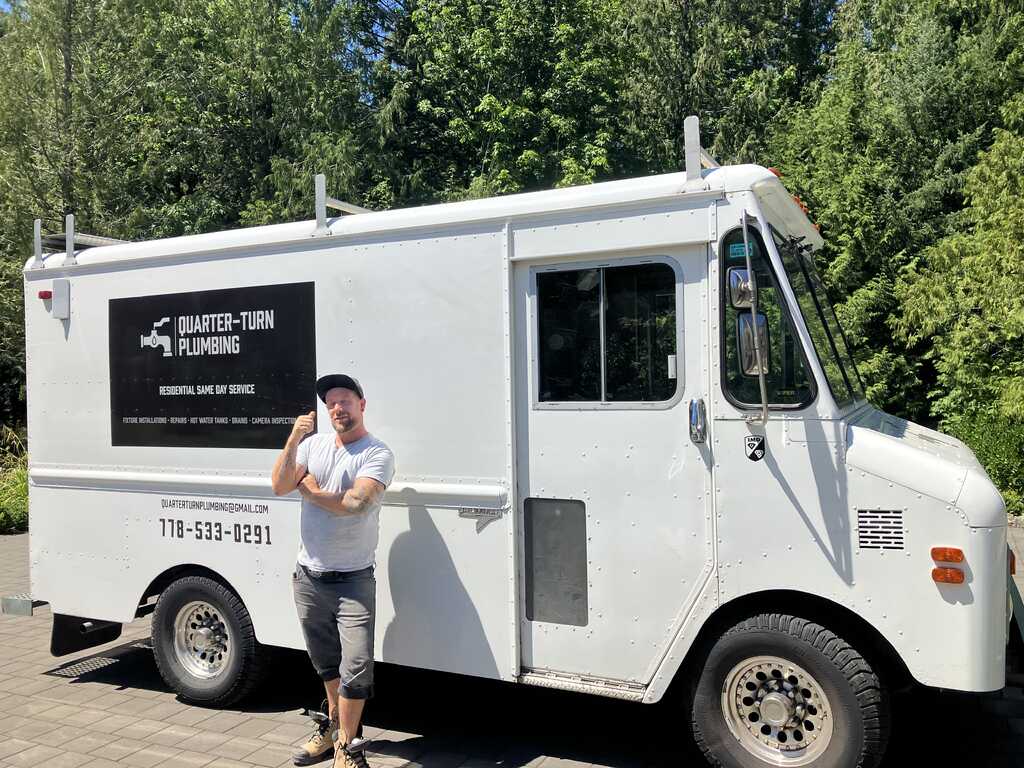
Quarter-Turn Plumbing runs sewer camera inspections across Port Alberni, Whiskey Creek, Coombs, Errington, Qualicum Beach, French Creek and Parksville. Chris is Red Seal certified, and the inspection comes with a straight read on what's in the line - not a sales pitch for work the pipe doesn't need.
If the line needs attention, we handle the drain cleaning, root removal, and pipe repair that follows.
If it doesn't, we'll tell you that and you can go firm on your offer with one less unknown.
Buying a home in the Alberni Valley? Book a sewer scope during your subject period - call 778.533.0291 or get in touch.


Comments